Back

Allergic rhinitis (AR) is a medical condition that involves nasal symptoms: blocking, running, itching, and sneezing, caused by allergens entering the nose of someone who is sensitized*. In some people, allergens also cause reactions in the eyes (allergic conjunctivitis), and / or in the lungs (allergic asthma).
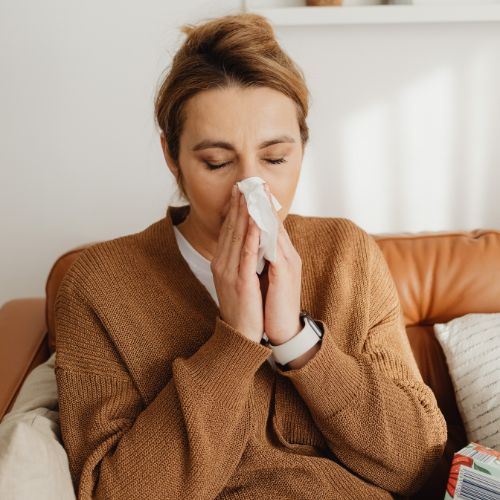
* Sensitization occurs when the body’s immune system recognizes a substance as foreign and starts to produce allergy antibodies to it. This process can happen without any noticeable symptoms. However, if the sensitised person is re-exposed to the same substance, the immune system may react, releasing chemicals including histamine. This causes inflammation of the inner lining of the nose, resulting in the typical nasal symptoms.
AR is very common. Worldwide, it affects between 10% to 30% of the population. Unfortunately, many people remain undiagnosed or misdiagnosed.
Although AR can develop at any age, symptoms often develop during childhood/adolescence, peak between age 20 and 40, and then may gradually decline. It is one of the most common long-term conditions in childhood. AR is uncommon in children under 2 years of age, but between the ages of 3 and 12, the number of sensitised children increases steadily. Children are more likely to develop AR if one or both parents are affected by the condition.
‘Rhinitis’ means inflammation (redness, swelling) of the nasal lining. It is linked to bothersome symptoms such as nasal congestion, sneezing, itching, and mucus dripping down the back of the throat. There are many causes of rhinitis, the commonest being a viral cold, which everyone suffers from time to time. Allergic rhinitis, on the other hand, is caused by allergies to harmless airborne substances. The allergic inflammation can also result in irritability of the nose, so that sufferers react not only to allergens but to other things such as temperature changes, smoke, perfume etc.
Sometimes a person with AR with an undiagnosed allergen, like house dust mite, presents with these non-specific reactions and is misdiagnosed as having Non-Allergic Rhinitis (NAR).
AR is sometimes called “hay fever”, but this name is confusing. The condition is not caused by contact with hay, and there is no fever. Hay fever typically refers to seasonal allergic rhinitis, but not all allergies are seasonal. Seasonal allergies occur in the spring, summer, and early fall, when pollen counts from trees, grass, and weeds are higher. House dust mites, cockroaches, and animal dander are examples of allergens that are present throughout the year and can cause year-round (perennial) allergic rhinitis.
Some symptoms of viral infections and allergic rhinitis are similar, but there are differences to look out for.
|
Condition
|
Symptoms
|
Onset of symptoms
|
Duration of symptoms
|
|---|---|---|---|
|
Allergic rhinitis
|
- Sneezing (often occurring in bouts) and itching of the nose
- Clear nasal discharge and/or blocked nose - Can be accompanied by itchy, red and/or watery eyes - Itchy throat/ears/ roof of mouth - Tiredness |
Usually a trigger, like exposure to pollen, house dust mite or a pet. Symptoms develop immediately on allergen exposure but ongoing exposure (e.g. to pets, house dust mite) may make it more difficult to link exposure with symptom onset.
|
As long as exposure to the allergen continues.
They may persist for hours afterwards |
|
Common cold
|
- Sore throat, then blocked and/or runny nose (thick and/or coloured discharge) and/or sneezing
- Tiredness - Coughing |
1 to 3 days after exposure to a cold virus (another sick person)
|
Usually a week or less
|
|
COVID-19
(coronavirus disease)
|
- Headache
- Sore throat - Runny or stuffy nose, sometimes also sneezing - Muscle aches - Tiredness - Sometimes a fever - Sometimes diarrhoea, nausea or vomiting - New loss of taste and/or smell - Coughing |
1 to 4 days after exposure to an influenza virus (another sick person)
|
A few days to two weeks, but some experience severe complications, requiring hospitalisation
|
|
The flu (influenza)
|
- Headache
- Cough - Muscle aches - Tiredness - Sore throat - A runny or stuffy nose - Fever or feeling feverish/having chills - Tiredness - Sometimes diarrhoea, nausea or vomiting (more common in children) |
1 to 4 days after exposure to an influenza virus (another sick person)
|
A few days to two weeks, but some experience severe complications, requiring hospitalisation
|
The table above is not intended for self-diagnosis, but to help raise awareness of the typical signs of a short-lasting common cold compared with allergic rhinitis. If symptoms persist, it is advisable to discuss them with your doctor to obtain a proper diagnosis and appropriate treatment.
Several substances inside and outside your house can trigger allergic rhinitis. Common triggers are:

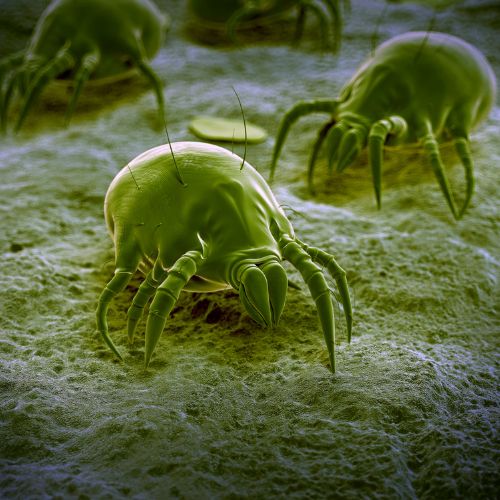


Pollens from trees, grasses, and weeds are the most common cause of seasonal allergic rhinitis. In people that are affected by year-round (perennial) allergic rhinitis, the most common causes are house dust mites, animal dander, cockroaches, and mould.
Occupational allergens can also cause allergic rhinitis. Over 300 agents can cause occupational rhinitis, the same ones which can induce occupational asthma.
Some are plant or animal proteins, (flour, latex, laboratory animals). Sensitization can be objectively shown by skin prick testing or a blood test (serum-specific IgE). Other agents cause inflammation of the inner lining of the nose (mucosal inflammation) by non-allergic mechanisms.(e.g di-isocyanates and glutaraldehyde) or via irritation (e.g chlorine and ammonia).

Wood dust

Latex

Metals

Animal dander

Flour dust

Chemical allergens
The tendency to develop allergies, such as allergic rhinitis (AR), can be inherited. This means the risk is higher in people with a family history of allergies. You are also more likely to develop AR if you have asthma or eczema.
Not everyone with genetic risks becomes allergic- the environment matters too. Protective factors include the microbes that live in and on your body. Early exposure to farm animals, dogs and soil decreases the allergy risk. Vaginal delivery, breastfeeding and early introduction of a wide variety of real foods can be protective. Vaccination against tuberculosis also appears to reduce the risk.
AR is a risk factor for subsequent asthma development. This risk can be reduced by treating your allergic rhinitis. Studies indicate that early diagnosis and adequate treatment of AR, including the use of allergen specific immunotherapy (AIT), can help reduce the risk of developing asthma.
Exposure to occupational allergens can result in AR before the development of asthma. It is vital to diagnose the AR and remove the worker from contact with the allergen before asthma develops.
We know that having a pet allergy is challenging, especially if you love animals and dream of having one yourself.
Contrary to popular belief, animals that are labeled as “hypoallergenic” are not truly allergy-free. Any breed of cat or dog can trigger allergic reactions. This is because it is not the fur that causes the allergies, but the animal dander (tiny flakes of dead skin that are constantly shed). In cats specifically, the protein responsible for allergies are found mainly in saliva, as well as in the urinary and reproductive tracts, and in skin glands. This means that hairless cats can be just as allergenic as long-haired counterparts.
Allergies are more than just a minor inconvenience! They can significantly affect your daily life and overall well-being, from everyday activities to sleep. You don’t have to simply put up with the symptoms, because effective treatments are available.
Treating allergic rhinitis not only helps reduce your symptoms and improve your quality of life, but it also benefits other aspects of your health. For example, managing your allergies can improve your sleep, making you feel more alert and productive during the day. If you also have asthma, controlling your allergic rhinitis is especially important, as it can help prevent your asthma symptoms from worsening.
While allergies often run in families, meaning you can inherit a tendency to develop allergies, not having allergic parents doesn’t mean that you can’t go on to develop allergic rhinitis yourself. Some people develop allergic reactions due to environmental factors. Allergies most often develop during childhood, but first allergic reactions can appear at any age.
You don’t need to put up with the symptoms of allergic rhinitis out of fear of feeling drowsy. This concern mainly comes from older, first-generation antihistamines, which were known to cause sedation. Today, many effective allergy treatments are available, including modern antihistamines that do not impair driving performance.
If you are concerned about side effects, it’s important to discuss this with your healthcare provider, who can help you choose the most appropriate and safe treatment for your individual needs.
When using nasal treatment for allergic rhinitis, it is important to know what’s inside of them. Corticosteroid sprays are safe to use in the long term and are a recommended first-line treatment option for people affected by allergic rhinitis. Some people can experience mild side effects like irritation, nose bleeding or dryness, which can often be resolved by learning a correct spraying technique.
However, another type of nasal sprays, called ‘nasal decongestants’ can be a potential issue. These sprays/drops can quickly shrink swollen tissue inside your nose, making it easier to breathe. But if you use them for more than a few days in a row, your nose can become dependent on the spray to stay clear. To avoid this problem, only use these sprays when absolutely necessary for the treatment of severe nasal congestion and always respect the recommended duration of use (no more than 7 days in a row).
At present, the goal of allergic rhinitis treatment is to control symptoms, as a complete cure is not yet available. However, for people whose symptoms are not adequately managed with standard treatments, allergen immunotherapy may be an option. This is currently the only treatment shown to alter the course of the disease, away from allergy and towards tolerance of the allergen(s) triggering the symptoms.
This website does not provide medical advice.
The information, including but not limited to text, graphics, images, and other material contained on this website, is for informational purposes only. No material on this site is intended to be a substitute for professional medical advice, diagnosis, or treatment and/or medical treatment by a qualified physician or healthcare provider. EUFOREA is not a medical organisation and cannot provide specific medical advice to patients via the Internet and/or Email. All patients are encouraged to direct their specific questions to their personal physicians. EUFOREA presents this information to patients so that patients can understand and participate in their own medical care. EUFOREA strongly emphasises that the information contained on this website is not a substitute for thorough evaluation and treatment by a qualified healthcare provider.
© 2025 - EUFOREA - All rights reserved. All content on this portal, such as text, graphics, logos and images, is the property of EUFOREA. They may not be reproduced, copied, published, stored, modified or used in any form, online or offline, without prior written permission of EUFOREA.